Leading and Learning from One Another: The AWE Client Ambassador Program
October 1, 2022

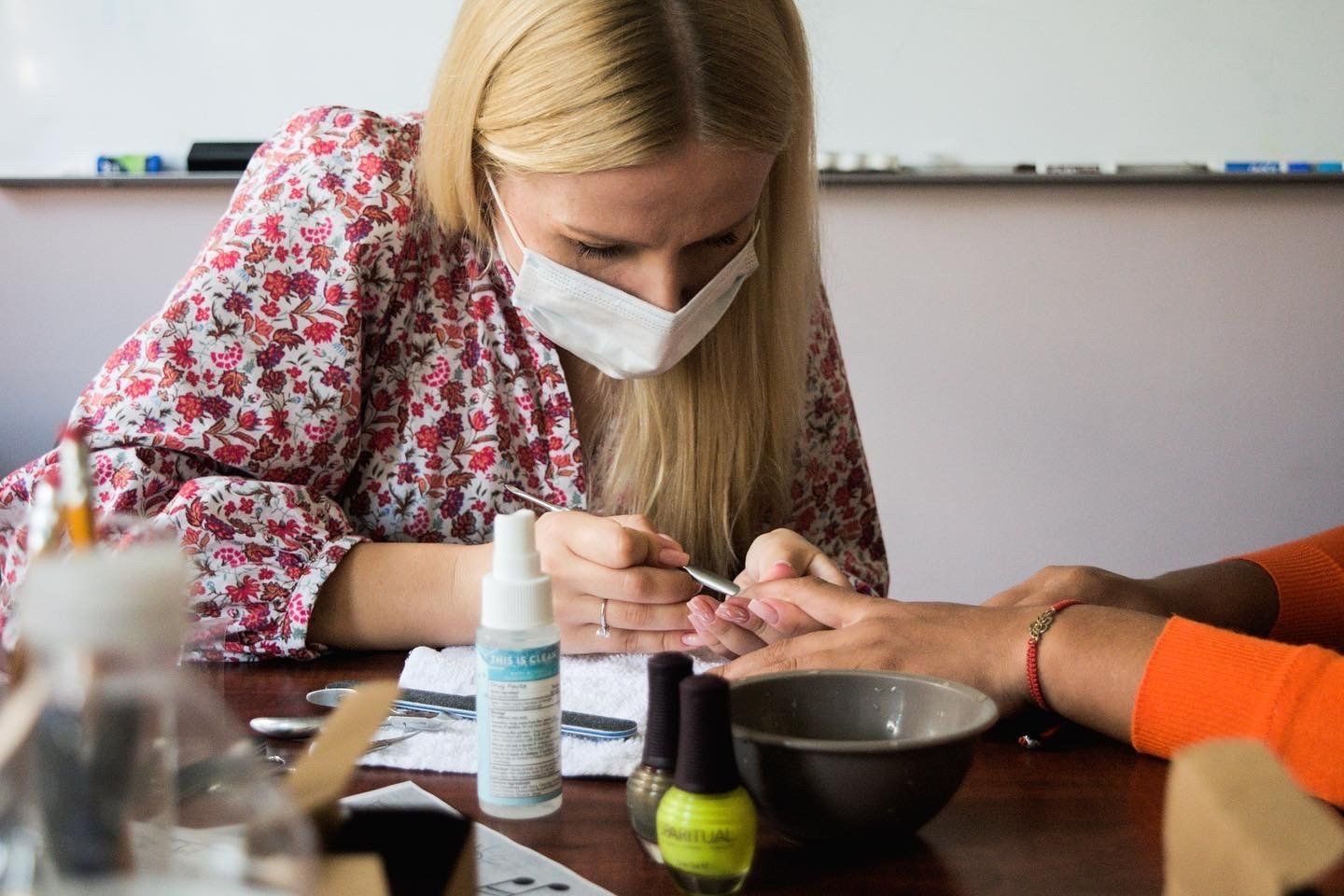
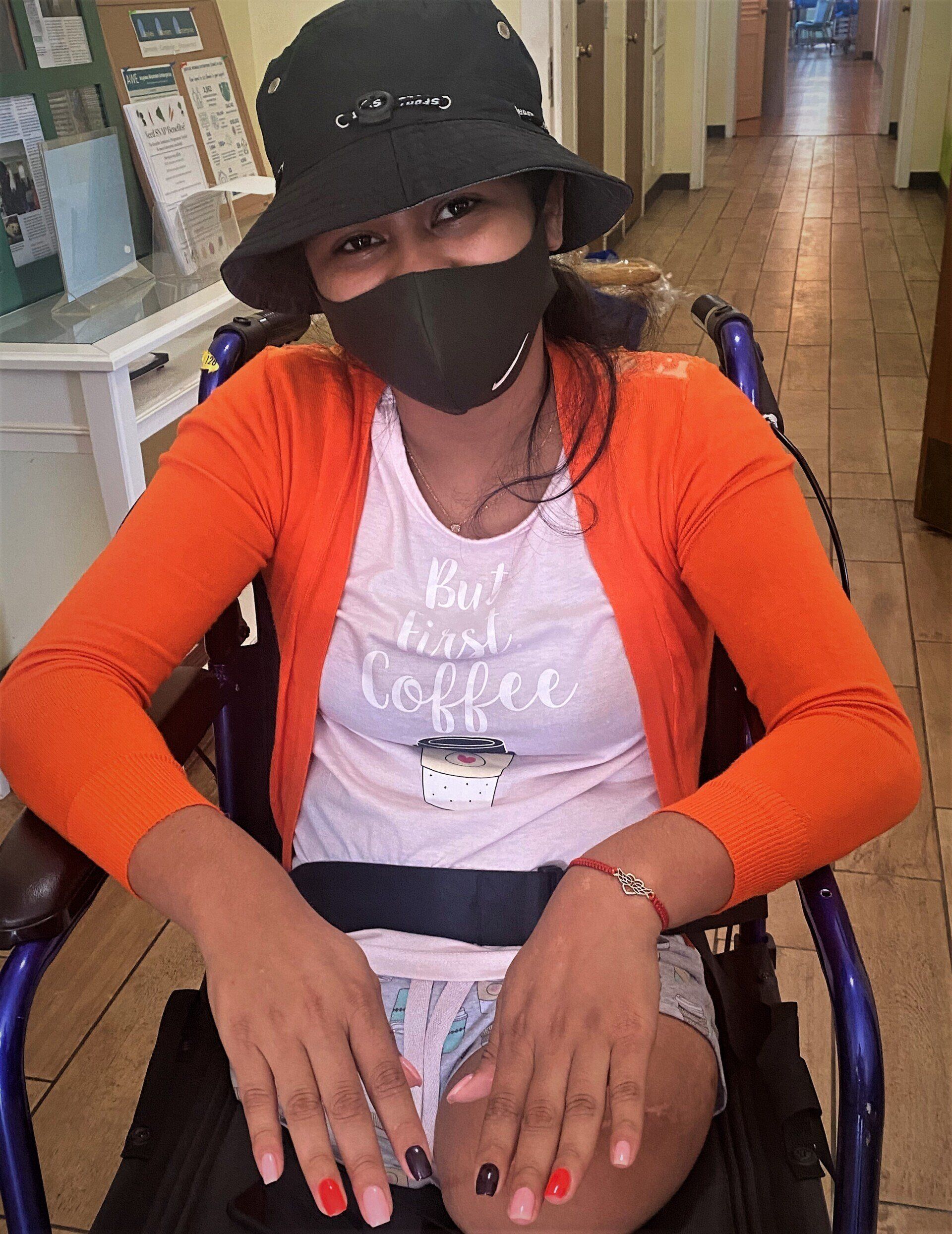
Alina gives a manicure during her class on self-care

October 1, 2022

By Rachel Braver


More than two years after transitioning to virtual services, AWE officially reopened its doors to in-person classes this summer. Every Tuesday and Wednesday we hold a range of in-person classes through the AWE Day Program, including ESL, financial literacy, yoga, and meditation. It is wonderful to have clients back in the office, and we are excited to continue growing the Day Program in the coming months.


We are also excited about our recently launched Client Ambassador Program (CAP). CAP gives current and former AWE clients the opportunity to contribute to the design and content of AWE services through client-developed and led classes and activities. Clients who participate in CAP receive guidance and support from AWE staff and an honorarium to compensate for their time and effort.


Forced migrants come to the US with a multitude of skills and talents. However, without work authorization or permanent immigration status in the US, they often have few opportunities to use them, and remain stuck at home without a source of income. Meanwhile, once granted status, many AWE clients are forced to take entry level jobs outside their former field. CAP serves as an opportunity for clients to share their expertise with others while developing leadership skills and receiving compensation for their work.


CAP kicked off in August with a self-care challenge led by Alina. Alina fled war in Ukraine earlier this year with her two children. She was enrolled in AWE services in the spring and resides in AWE housing while she waits for her asylum application to be adjudicated. A cosmetologist by training, Aline facilitated a discussion on self-care and wellness with other AWE clients. Afterwards, she gave attendees manicures and nail care advice.


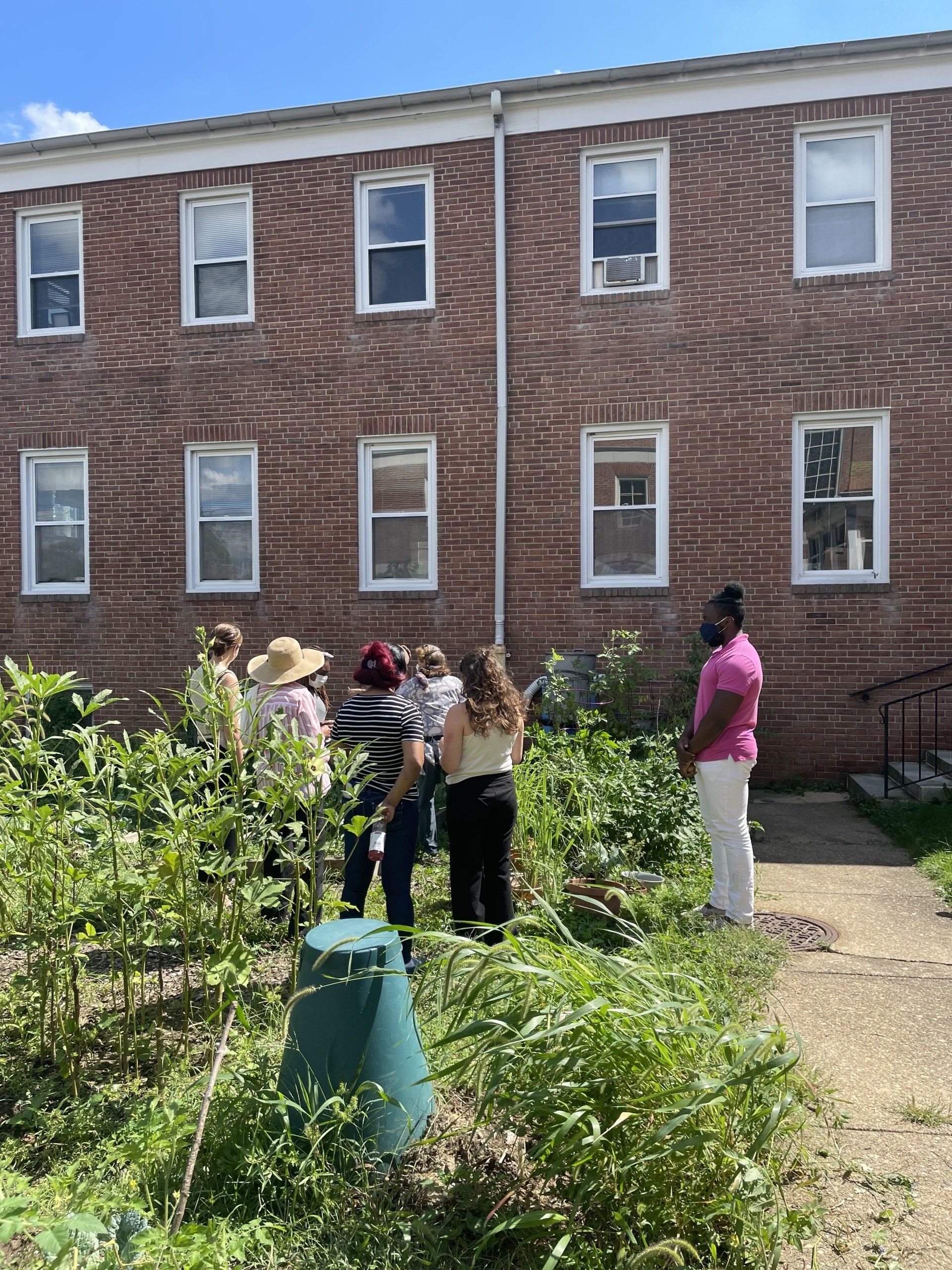
In September, Mama Mercy, a graduated client, led a tour of the AWE community garden, which she has planted, lovingly tended, and harvested for years. Mama Mercy shared recipes from her home country of Togo using plants grown in the garden. She also encouraged clients to identify vegetables and fruits from their home countries that they would like to grow in the garden.


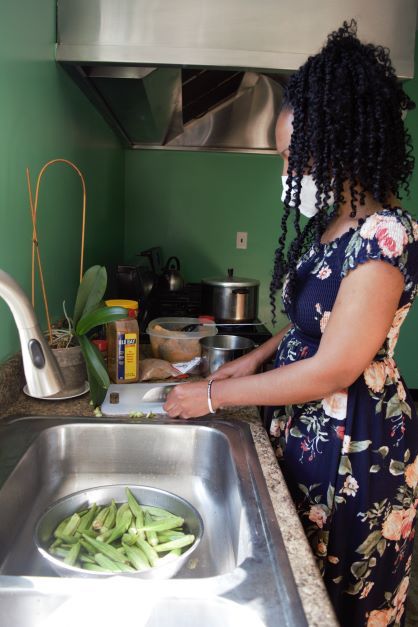
The following week AWE client, Marvis, led a cooking class. Marvis worked as a chef in Cameroon until she was forced to flee in 2020 due to the ongoing civil war. Using AWE’s spacious kitchen, she showed clients how to cook a traditional Cameroon meal of fufu and okra fish stew. Marvis speaks some Spanish and explained parts of the recipe in Spanish to her Spanish-speaking fellow clients.


We look forward to many more client-led classes and workshops in the coming months. In October, a graduated AWE client who recently received her work permit and resumed her career as a nurse will lead a class on first aid. Next week an Afghan client who has a background in computer science, will lead a workshop on using apps and sending emails.
Want to support AWE’s work with asylum seekers and trafficking survivors?

DONATE

Share this post

All News and Events
By Laura Brown and Rachel Braver November 17, 2025
Every October, survivors, advocates, and allies unite across the country to honor Domestic Violence Awareness Month. But this October, they are grappling with the effects of two new legal rulings which make asylum even harder to obtain for survivors of domestic violence. The impact of the rulings is illustrated by the case of an AWE client, Ana*. Ana* suffered decades of abuse in her home country at the hands of her husband, who believed that a husband has the right to treat his wife however he wants. Ana was determined to find protection for herself and her children. Repeatedly, she turned to her church, the police, and the judicial system for help. Yet, every time she was ignored, dismissed, and even mocked by the systems meant to protect her. Over and over, she was told to accept the abuse because that was the role of a wife. After a decade of abuse, multiple attempts on her life by her husband, and numerous dismissed police reports, Ana knew she had to flee to save her life. It was clear that she would not be protected in her country of origin. Ana fled to the United States with her children seeking safety. She made her way to Baltimore, where she connected with AWE. At AWE, Ana worked with our legal team to apply for asylum. Over many meetings, they documented Ana’s story - about the abuse she experienced and her repeated attempts to find protection. Together, they gathered police reports, medical and court records, and letters from friends and family, attesting to the abuse and her efforts to find help. At her hearing, Ana underwent hours of questioning. She testified that her husband’s abuse was motivated by his belief in male dominance and the dominance of a husband over his wife. She described how this belief is pervasive in her country, and how it made it so difficult for her to receive the protection she needed. The legal team argued that Ana qualified for protection as a woman who could not safely leave an abusive relationship in a country where the government failed to protect her. We submitted a legal brief citing years of legal precedent recognizing that violence- including domestic and intimate-partner violence- motivated by the victim’s gender constitutes persecution under asylum law. The judge agreed, and Ana’s case was approved. Ana thought that she would finally be able to live in safety and begin to rebuild her life with her children. But just a few weeks after her case was approved, the two new rulings were released, and suddenly Ana’s asylum approval was in jeopardy. The rulings drastically narrow the legal pathways to protection for survivors like Ana. One ruling reclassifies intimate partner and gender-based violence as “private matters” instead of persecution. It also raises the standard for proving that an applicant’s country cannot or will not protect them from the violence, meaning that asylum claims will be denied even with evidence that police ignored a victim’s attempts to seek protection. The rulings also move to exclude gender-based violence as a basis for asylum. To qualify for asylum, applicants must prove that they experienced persecution because of a protected characteristic: race, religion, nationality, political opinion, or membership in a particular social group. When the United Nations (UN) Refugee Convention - which is the basis for US asylum law - was written, gender was not included as a protected characteristic. In the years since, however, as gender-based violence has become better understood, the UN has acknowledged that gender-related asylum claims should be recognized under “membership in a particular social group”. In recent decades, judges have recognized gender-related social groups such as the one our legal team argued in Ana’s case: “women who cannot safely leave an abusive relationship in a country where the government fail to protect them”. In granting these kinds of asylum claims, judges acknowledge that in many contexts, gender puts individuals at risk for persecution because of societal views. However, the new rulings state that social groups based on gender are too broad - ignoring the reality of violence motivated by gender. Fortunately, Ana’s asylum approval has not been rescinded. But if her case had been decided just a few weeks later, her application may have been denied, and she would have been forced to return to danger. For countless survivors of domestic violence whose asylum applications are still pending, the door to safety has likely been shut abruptly by these rulings. This is another example of the many ways the current administration is rewriting immigration law, creating incredible volatility and rapidly denying people their rights and protections. At AWE, we will continue to fight for survivors like Ana — and for every person’s right to safety, dignity, and the opportunity to rebuild their lives.
By Laura Brown October 1, 2025
This October 11th, we will gather for AWE’s Annual 5K Run & Walk—our biggest fundraiser and one of our favorite traditions. Now in its 12th year, the race has grown from a small neighborhood run to an event that brings close to 200 runners and walkers to Herring Run Park each fall. The 5K helps us raise critical funds to support Baltimore’s immigrant community, especially as our clients face growing challenges. Many are struggling to cover legal fees, government application costs, rent, and medical bills, all while living with the constant fear of increased ICE enforcement. Even a simple trip to the grocery store or a doctor’s appointment can feel dangerous. In 2025 alone, we’ve distributed more than $200,000 in emergency financial assistance to hundreds of asylum seekers and immigrant trafficking survivors—and the need continues to grow. The 5K helps us meet these urgent needs, but it’s also about more than fundraising. It’s a chance for clients, staff, volunteers, and supporters to come together, to connect, and to remind one another that we are not facing this fight alone. As the world grows darker and more frightening, I find myself needing these shared spaces more than ever —whether it’s the joy and fun of the 5K, community meals shared twice a week at AWE, rallies and protests organized by partners, or a celebration when a client is granted asylum. These moments sustain me. They matter because they offer what this administration is trying to take away: connection instead of division, hope instead of despair, resistance instead of conformity. They remind us that even in the face of so much cruelty, we still have the power—and the responsibility—to resist, to push back, and to protect and support one another. The 5K is one of those spaces—a moment to come together, to create joy, and to remind each other that we are not alone.  Whether or not you join us on October 11th, I hope you will keep seeking out and building these spaces of connection and resistance—by volunteering, donating, sharing stories, and standing beside our neighbors in times of need. However we choose to take part, every act of showing up is a refusal of cruelty and an affirmation of each other’s humanity and dignity.
By Rasha Elmahdi July 28, 2025
Rasha, AWE’s Policy, Advocacy, and Health Specialist, in front of an AWE housing unit
By Laura Brown March 24, 2025
Raffle, Music, and Drinks at Peabody Heights Brewery. Enjoy great music and drinks and win prizes while supporting our work! Join us on April 25, 2025, from 4–9pm. All raffle proceeds and a portion of taproom sales will go toward our programs.
By Beth Watkins March 10, 2025
We complete satisfaction surveys with every client throughout their time at AWE. One question we always ask is, “What is the most impactful aspect of our services?” Overwhelmingly, clients mention the sense of community and welcome. Community is at the heart of our work, and we are committed to creating a warm, welcoming, and supportive space for everyone we serve. Clients, volunteers, staff, donors, and partners are all essential parts of the AWE community.  But what exactly do we mean when we talk about the AWE community?
Maria’s two daughters play in AWE’s community garden.
By Lauri Hidalgo and Laura Brown January 18, 2025
Maria fled violence in Central America with her two small children and came to the US seeking safety. Soon after she arrived, an acquaintance in Maryland offered her a place to live and help finding a job. But once here, Maria and her daughters were locked in a room, and she was only allowed to leave to work. Her traffickers forced her to use fake identity documents and hand over all the money she earned. They threatened to deport her and hurt her family back home if she tried to escape.  Maria and her daughters eventually escaped, and a few weeks later, she showed up at AWE asking for help. We quickly enrolled her and began providing wraparound support for the family. Maria is now working with a lawyer to apply for a T Visa—a form of immigration relief available to trafficking survivors who cooperate with law enforcement to investigate and prosecute their traffickers. Maria is one of thousands of immigrant adults and children who are trafficked in the US each year. Without permanent immigration status and often unfamiliar with the language, culture, and laws of their new country, immigrants are especially vulnerable to exploitation and abuse.
By Beth Watkins December 2, 2024
On the morning of November 6, AWE staff gathered to discuss the outcome of the election and begin to process the impact of the results on our organization and our clients. The room was heavy with shock and sadness, but also a resolute, quiet tenacity.  We didn’t know if our clients would feel safe coming to class, but we were grateful that almost twenty clients did. Before lunch, clients, staff, and volunteers gathered in our community room. French-speaking clients sat in the front of the room on the left, Arabic-speakers on the right, and Spanish speakers in the middle. Staff members fluent in these languages sat within each group to interpret. English speaking clients, volunteers, and staff were sprinkled across the rest of the room. AWE’s executive director addressed the group, pausing for interpretation as she spoke. She shared our sadness about the news and assured clients that AWE is not going anywhere. She promised that AWE will continue to provide clients with accurate information about their rights and changes under the new administration that may impact them. She also promised that AWE will continue to be a safe space for our clients, and that we will keep advocating for a world where they are welcome and safe. When she asked if anyone had questions, multiple hands shot up. “Is it safe to leave my home?” a client asked. “Will they take my asylum?” someone else asked. “What will happen to AWE?” multiple people questioned. We don’t have all the answers, and we have fewer assurances than we’d like. Trump has vowed to implement sweeping inhumane and unjust policies that would profoundly threaten the lives and safety of forced migrants everywhere, but a lot of details are still unclear. We do know, however, that we will continue to gather in the community room every few weeks to listen, answer questions, and provide accurate information. In the coming weeks, we will also help clients submit applications for asylum and other forms of immigration relief, help clients develop safety plans, provide Know Your Rights Trainings, and seek out additional funding to ensure our services remain sustainable and responsive to changing needs of the communities we serve. We will also continue to create spaces where our clients feel seen, heard, and safe. Where they can express their anger, fears, and hopes. Where they know that they aren’t alone. We will do everything we can to a place where people feel safe, and where immigrants are welcomed with dignity. We hope you’ll join us.
By Laura Brown October 11, 2024
AWE welcomes dozens of asylum seekers and trafficking survivors through our doors each week. Clients attend classes, share meals, meet with their case manager, and fill bags with groceries, diapers, and clothing to take home. Many clients also access mental health services, including individual counseling, group therapy, and other therapeutic activities like acupuncture, gardening, and yoga. Our clients arrive in Maryland after protracted periods of trauma. Many fled war, persecution, forced displacement, and human rights violations. They often experience additional violence on their journey to the US. In 2020, Doctors Without Borders reported that 48% of forced migrants experienced sexual violence on their way to the US and nearly a third were kidnapped at some point during their journey. But once in Maryland, clients face many barriers to healing. Accessing interpretation for therapy can be challenging, and many providers don’t have experience working with forced migrants. Meanwhile, most clients are ineligible for Medicaid and without work authorization they can’t afford private care. But without treatment and support, trauma can have long term consequences and symptoms can get worse. PTSD and depression can make it difficult to focus on finding housing, securing employment, and navigating the immigration process. Meeting the mental health needs of our clients is a critical component of our work. We recognize that healing looks different for different people, so we provide many different types of support. We also work to remove the many barriers our clients face to receiving the support they need. Individual therapy is a big part of what we do. In 2013 we began partnering with the Intercultural Counseling Connection (the Connection). The Connection, which is collocated with AWE, is a referral network of pro bono mental health professionals that connects our clients to individual counseling. In 2022, we started partnering with HEAL Refugee Health and Asylum Collaborative (HEAL) to provide individual therapy to our minor clients onsite. We also partner with a private, Spanish speaking therapist who provides therapy to youth trafficking survivors. In 2024, 48 clients have accessed individual therapy through our partnerships. Many clients also participate in group therapy. The Connection leads biweekly group therapy sessions for adults and HEAL leads biweekly group therapy for Spanish-speaking youth. Groups provide safe and inclusive spaces where clients can address concerns and develop interpersonal connections with each other. Meals are provided before all sessions and clients leave with groceries, diapers, and toiletries. So far in 2024, 79 clients have attended group therapy at AWE, including 45 minors and young adults. Many clients also access alternative forms of therapy. AWE offers bodywork activities like acupuncture, massage therapy, and yoga, to help clients release stored tension, reconnect with their bodies, and process emotions that may be difficult to access through verbal therapy. Community gardening, nature retreats, and music and dance therapy can help clients decompress and connect with each other. More than 70 clients have participated in alternative therapy in 2024. We make sure that clients can access all these services. We provide bus passes for clients attending daytime group activities and ride shares for evening events. We prioritize working with therapists and group facilitators who share the cultures and languages of our clients, and we always provide interpretation when needed. We do all of this because we believe our services are most impactful when they’re holistic and client centered. Offering different types of mental health services and making sure they’re accessible, ensures our clients have the resources and support to rebuild their lives with safety, trust, and empowerment.
More Posts