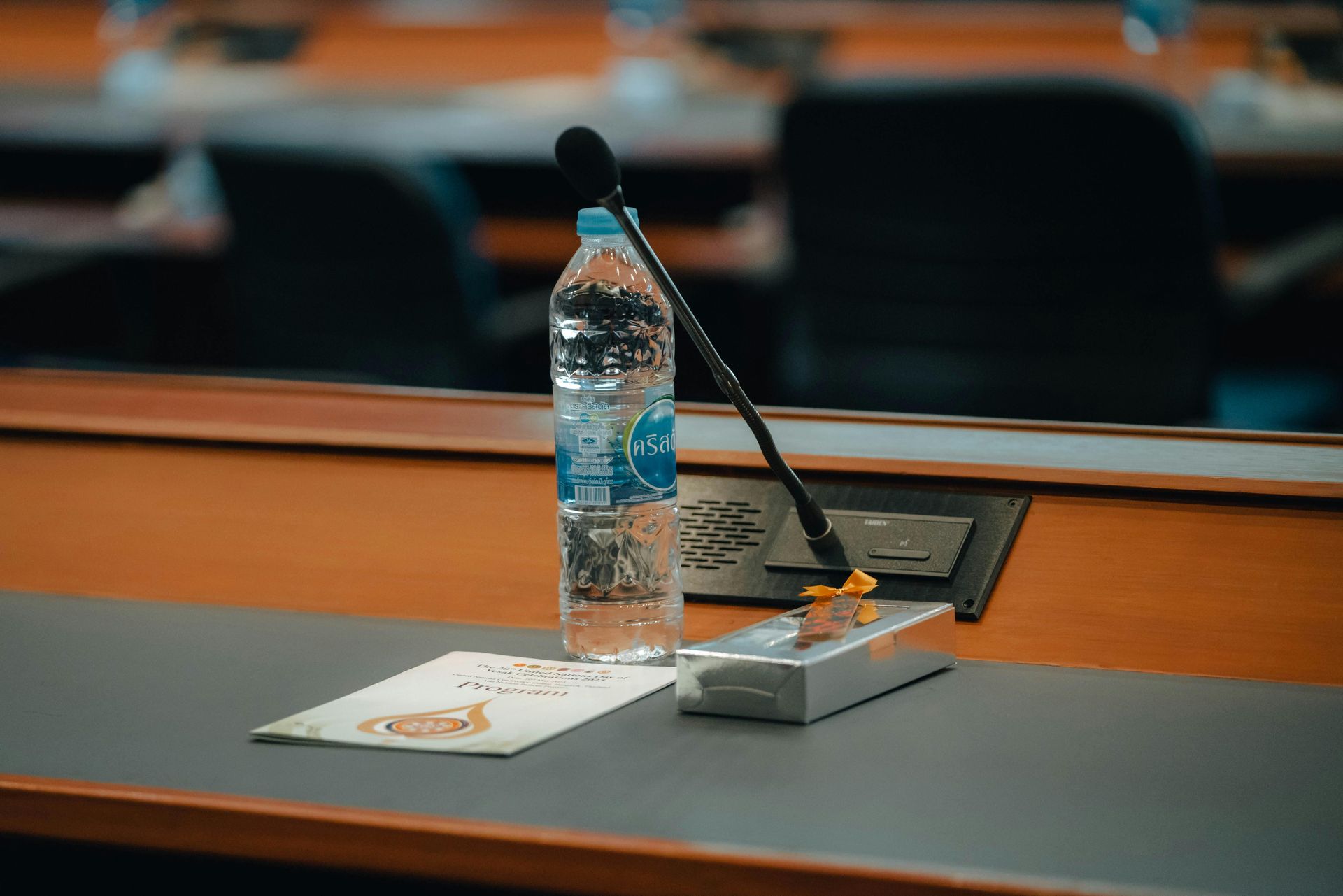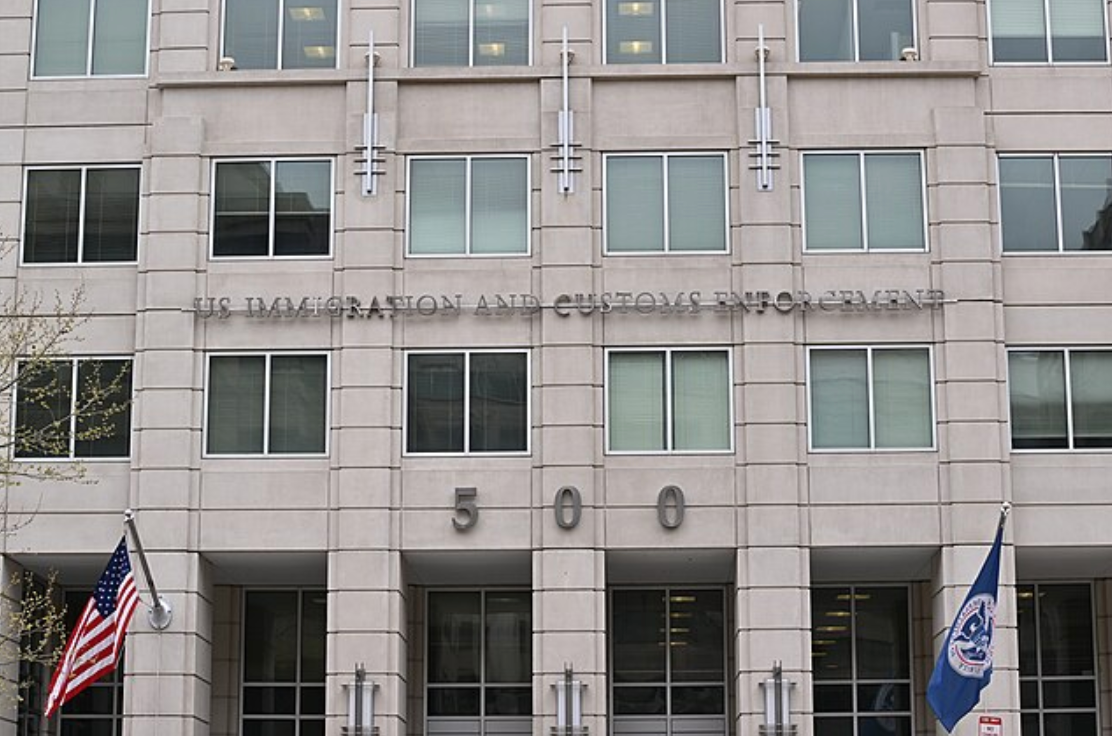
AWE testifies to the Baltimore City Council about impact of immigration enforcement on Baltimore City students
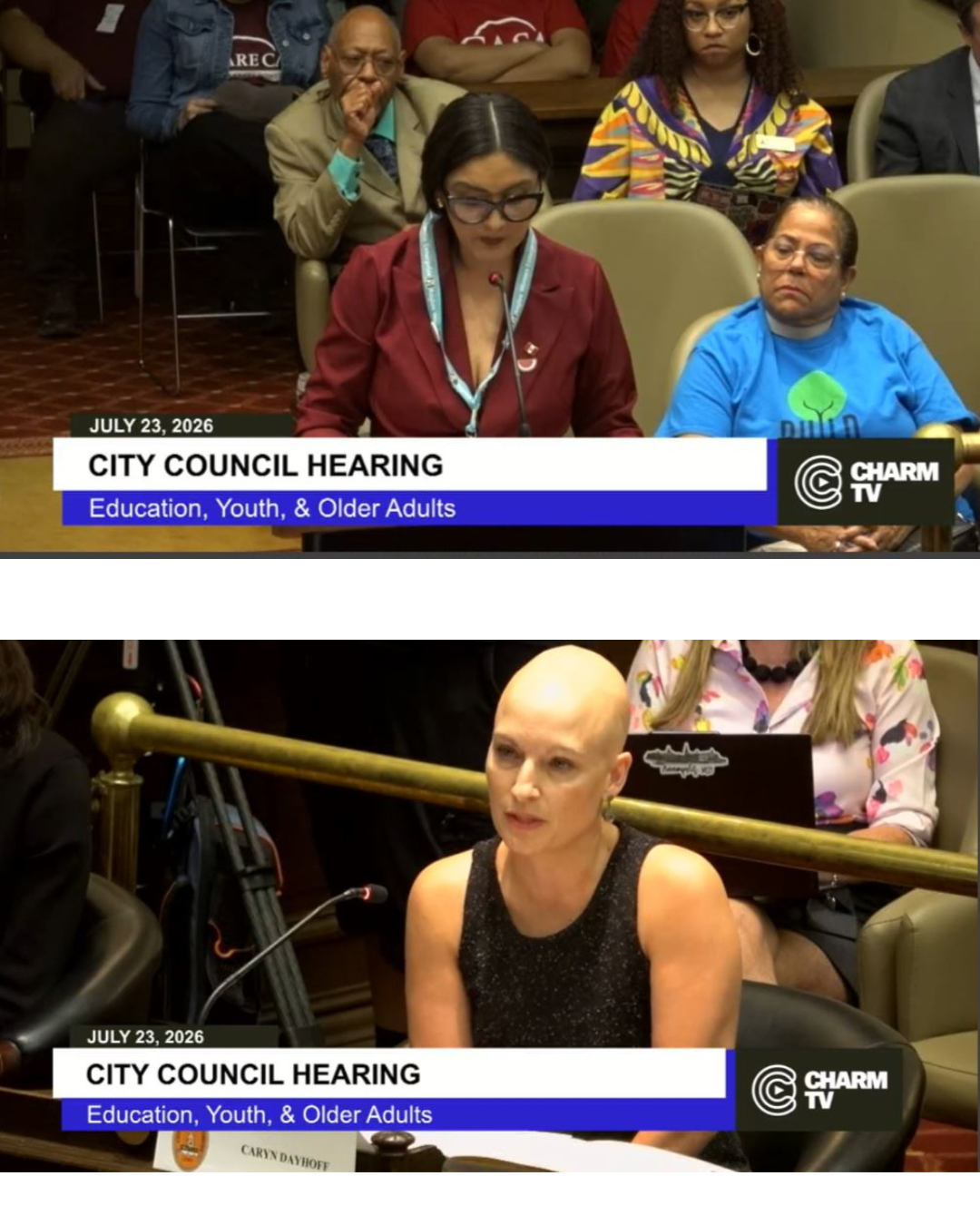
AWE staff spoke to the Baltimore City Council to share what we have witnessed as a community service provider and to relay the testimonies our clients have shared with us about immigration enforcement and its impact on their sense of safety in schools and extracurricular activities.
In addition, AWE submitted written testimony to the Council. Below is the testimony provided by AWE clients that was submitted to and presented at the Baltimore City Council hearing on 7/23/2026.
AWE respectfully submits this written testimony to share what we have witnessed as a community service provider and the experiences our clients have shared about how federal immigration enforcement is affecting their children's access to school, extracurricular activities, and overall sense of safety.
The impact of federal immigration enforcement on the families we serve has been profound. Many families are living with constant fear. Parents have changed their daily routines, paying for private transportation instead of using public transit, avoiding extracurricular activities, and limiting trips outside their homes because they no longer feel safe. The emotional toll on parents and children has been significant.
Many of the families we serve rely on public transportation to get their children to school. Parents have told us that when they see unmarked vehicles, individuals with face coverings, or unfamiliar cars nearby, they become frightened and return home rather than continue to school. Some have kept their children home for days or even weeks because they feared they or their children would be detained on the way. Many families describe the guilt they feel as they watch their children miss educational, social, and extracurricular opportunities because fear has made it difficult to leave their homes.
Many of our clients have asked us to share their experiences with the Council. The following stories are shared with their permission and reflect only a small sample of what we have witnessed in recent months.
- One mother whose son attends a Baltimore City public school described how excited her son was to go on a class field trip to Hersheypark. While many parents looked forward to the opportunity, she experienced it very differently. Instead of feeling excited for her son, she was consumed by fear worrying that something might happen to him or that she herself could be detained while he was away. Rather than looking forward to hearing about his day, she anticipated anxiously checking her phone and wondering whether her family would still be together when he returned home.
- One mother of a kindergartener is enrolled in ICE's Intensive Supervision Appearance Program (ISAP). She wears a GPS ankle monitor, attends monthly ICE check-ins in Hanover, and must remain at home for frequent home visits from her ICE officer. She has no criminal history and is complying with all the requirements of her pending immigration case. One scheduled home visit fell on the day of her daughter's kindergarten graduation. The ICE officer never arrived, but she could not leave her home in case he came later. As a result, she missed her daughter's kindergarten graduation.
- A father shared that his son had finally begun thriving in kindergarten after struggling during his first few months of school. Then, several members of their church were placed on ankle monitors, and the family learned that someone in their community had been deported. His son's anxiety increased dramatically. He began withdrawing at school and became very upset each time his father had to report for a scheduled ICE check-in.
- Another mother shared that her eight-year-old son asks her to send him text messages throughout every school day so he knows she has not been taken by ICE. Instead of focusing on school, friends, or simply being a child, he spends the day worrying whether his mother will still be there when he gets home. ∙
- A mother of three children attending Baltimore City schools described how the immigration enforcement climate has dramatically changed her family's daily life. After ICE agents were reported near her son's school and people were detained near her home, she no longer felt it was safe to walk her son to and from school, even though they live only a short distance away. On some days, she kept him home because she feared encountering ICE on the way. The impact extended beyond school. Last summer, she enrolled her son in a soccer program at Patterson Park, but withdrew him after learning that ICE agents had begun showing up in the area and detaining people.
- Another mother with a daughter who attends a Baltimore City school shared: "My biggest fear is having to take my daughter to the school bus stop because I live near 7-Eleven and Home Depot. I used to walk there feeling very afraid. Right now, I'm calmer because my daughter is on school vacation, but once she goes back to school, I'll be very scared and worried again."
- Another client told us that her greatest fear is being separated from her family. Last school year, her son attended Fallstaff Elementary School and missed numerous days of school because she feared taking him after learning that ICE agents were near the school. She shared: "It is very scary because my son only has me as his mother, and we do not have any other family here. I am afraid that the government would take him away from me if they detained me. We are afraid to leave the house and not know if we will come back, or even come back alive, because I have seen that they are being very aggressive and killing people. The other day I saw them take a father away, and one of the immigration officers had to stay behind with a baby who was about two years old. Most of the people they are detaining are not criminals. They are fathers, single mothers, and people who are fighting to provide for their children. My brother is currently being detained, and it is heartbreaking to hear what he tells me about the reality of detained migrants. Every day, between 20 and 25 migrants arrive at the detention center. Many mothers cry for their children. It makes me feel helpless that I cannot do anything, not even for myself. This fear keeps us from going out. We are afraid that something will happen to us."
AWE also serves many teenage clients who are students in Baltimore City schools. Many have shared that they are terrified to attend school.
- One teenage client shared: "There are four people living in my home: my sister, her two children (a girl and a boy), and me. Since the situation with ICE has become more complicated, our home has practically become a refuge 24 hours a day. My sister lives with the constant fear that something could happen to her if she goes outside, and that fear also affects her children, who spend most of their time staying inside the house. It is difficult for her to find a job and live a normal social life. [What] immigrants are living through forces us to make decisions we never wanted to face."
- Another client in high school shared: "I study at the National Academy Foundation school. I have been afraid of going out and being detained. I have not stopped going to school, but there is always that worry in the back of my mind about something happening. I am afraid of being taken away or detained. This situation has caused fear for me and my family because we do not know what could happen. It makes us feel nervous and less safe when we are outside."
- Another high school student shared: "I have been afraid to go to school because near my school there is a Hispanic store [where] many people have been detained. It makes me afraid because I have to pass through that area to get to school. I am scared that ICE might detain me."
- One client who graduated this spring shared with us that they were afraid to go to school because they feared something would happen to them on the way there. At one point, they stopped attending school for a period of time after hearing that ICE might be checking schools. The immigration enforcement climate also affected their family, causing them to stop going out together and avoid family activities. They were even afraid to go to work because of the possibility of being detained.
While these testimonies represent only a small sample of the families we serve, they reflect a pattern we have witnessed repeatedly. Federal immigration enforcement is disrupting children's education, limiting participation in extracurricular activities, and creating profound fear and uncertainty for families.
AWE is deeply concerned that these impacts will continue without meaningful action to protect the safety and well-being of Baltimore's immigrant families. Every child deserves to learn, play, and grow in a community where they feel safe, and every parent should be able to take their child to school without fearing family separation.
Thank you for your consideration of this testimony and for your continued commitment to the well-being of Baltimore's children and families.
Respectfully submitted,
The staff and clients of Asylee Women Enterprise (AWE)
Share this post
All News and Events